

Shoulder complaints
It is very likely you or someone you know has had shoulder complaints. “I have a bursitis or tendonitis” are very commonly-heard terms. Not strange, if you realize shoulder pain occurs in approximately 31% of the population.
Most complaints occur in the area under the acromion, where the shoulder tendons and bursas are. These complaints can restrict you in things as driving a car, getting dressed or undressed or while reaching.
You could also be recovering from a shoulder surgery. The shoulder is often painful and sometimes stiff during the first few weeks after surgery. This is caused by mandatory rest in a sling most of the times.
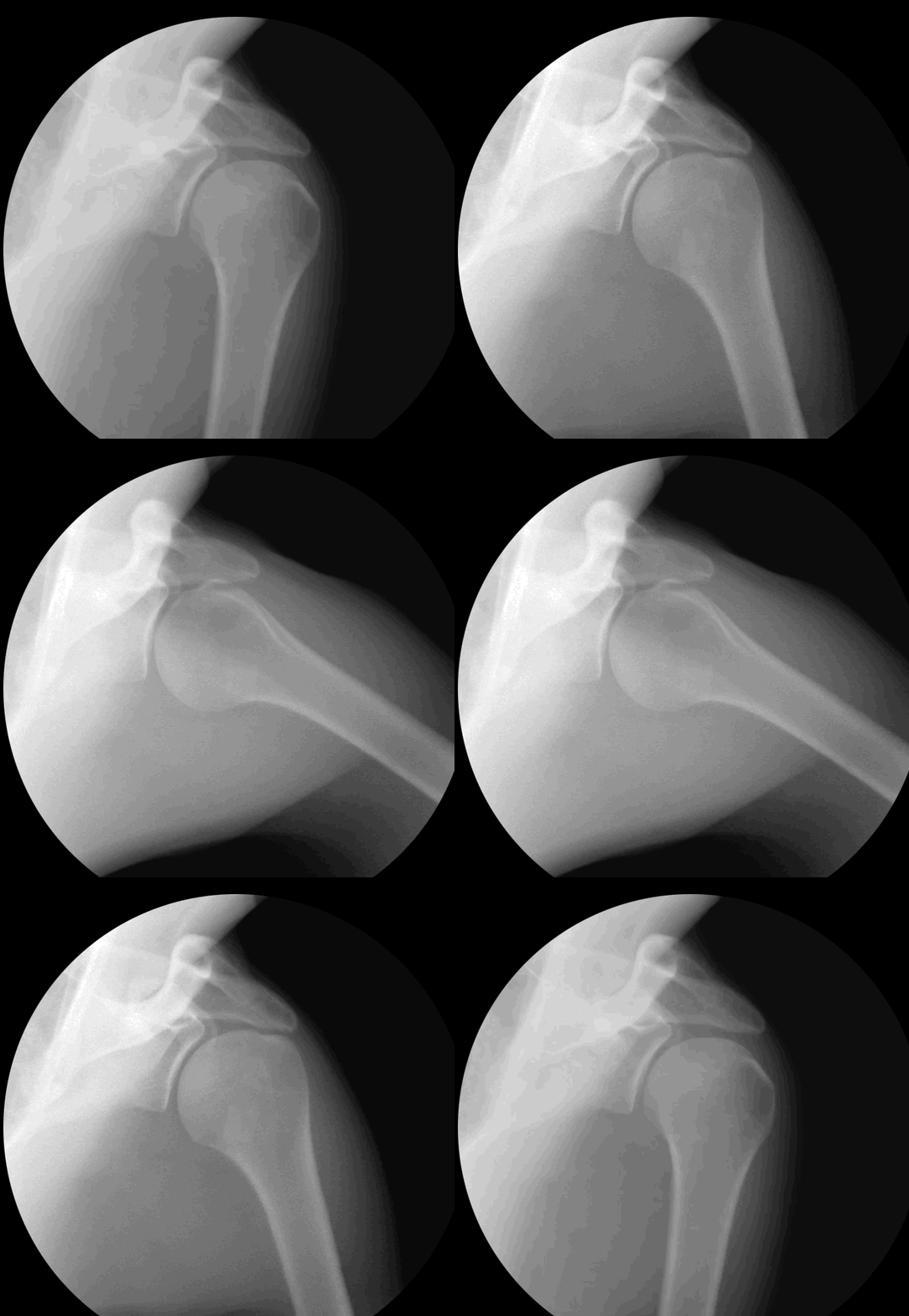
Your upperarm, shoulderblade and collarbone together form your shoulder. The shoulder cavity is a part of the shoulder blade. It is small and shallow and guarantees a great range of motion.
Similar as the hip joint the joint cavity is surrounded by a ring of cartilage, called the labrum. It provides optimal joint congruency and stability. The joint capsule, a thin layer of connective tissue, covers the shoulder joint. This capsule and four deep lying shoulder muscles stabilize your shoulder joint, preventing luxation.